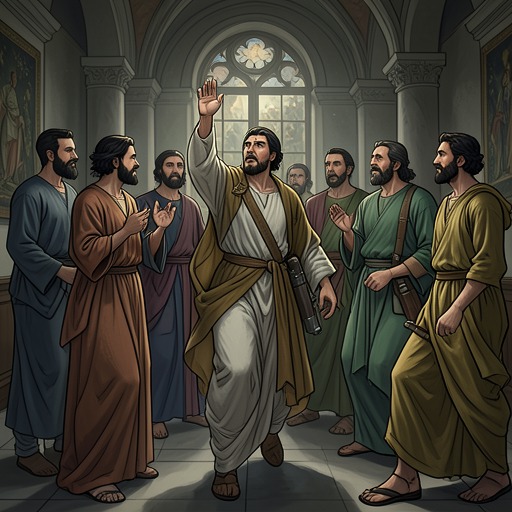
Peter’s miraculous escape from prison
Don't Leave God Alone: How to Get God's Attention, Remain in His Presence, and Even Change His Mind to Make a Difference in Your WorldPeter’s miraculous escape from prison is the central Acts 12 example of a church that refuses to leave God alone. After James is killed and Peter is imprisoned, the church responds not with political persuasion or a merely natural strategy but with unceasing prayer, and Peter is released. The episode becomes a model of persistent intercession, disciplined dependence, and the surprising arrival of an answer that worshipers may initially fail to recognize.
Causes and Background
The crisis begins when Herod the king stretches out his hands against the church. He has already killed James, the brother of John, with the sword, and because that action pleased the Jews, he proceeds to seize Peter as well. Peter is therefore not detained in an ordinary circumstance: the church has witnessed one apostle's death and now faces the likely loss of another. The stakes are both personal and communal, since the attack threatens the visible life and mission of the early church.
The surrounding argument treats this danger as a test of the church's response. The believers do not attempt to solve Peter's imprisonment through public demonstrations, a gift to Herod, or some other proposed natural remedy. Their defining decision is to turn toward God and remain there. Acts 12 is consequently read as an example of the early church's spiritual power, attributed to its diligence and its refusal to quit seeking God's attention.
The Church's Persistent Prayer
The narrative's governing action is stated directly: Peter is kept in prison, but prayer is made without ceasing by the church to God for him. The church's prayer is not described as a brief emergency appeal followed by resignation. It is an organized refusal to give up, a decision to continue until Peter is released. The danger remains real while the believers pray, yet the community treats persistent intercession as its active response to political violence and imprisonment.
This episode is connected with the book's broader teaching that importunity means being shameless, bold, determined, pressing, entreating, and persistent in requesting. Jesus' teaching in Luke 11 and the command to pray and not faint in Luke 18 are used to define the attitude the church embodies in Acts 12. Persistence is thus not portrayed as a failure to accept reality; it is presented as faith's deliberate refusal to regard an apparent negative answer as final.
Release and Recognition
Peter is released as the consequence of the church's prayers. The account emphasizes the reversal: the apostle who appeared destined to follow James into death is instead freed and makes his way to the house where the believers are praying. Yet when he arrives, they think he is a ghost. Their reaction creates an important tension within the scene. They have continued to pray for Peter, but the answer is so unexpected that they initially fail to identify it when it stands at their door.
That surprise becomes part of the episode's instruction. Prayer does not always provide visible evidence while the trial is still pressing upon the believer, and an answer may arrive in a form or at a moment that exceeds expectation. The praying community must therefore learn not only to persist but also to recognize the answer when it comes. The movement from imprisonment to release is paired with a movement from anxious petition to astonished recognition.
Meaning for the Book's Theology of Prayer
Peter's escape functions as biblical support for the principle that believers should refuse to leave God alone. The same principle is applied elsewhere to daily fellowship: the author recalls hearing the Lord plead, "DON'T LEAVE! PLEASE don't leave!" as he was leaving his prayer and study room, then interprets that moment as evidence that God desires sustained fellowship rather than a strictly limited appointment. Acts 12 gives the principle a communal and crisis-centered form: the church remains before God when one apostle has been killed and another is imprisoned.
The episode also contrasts regular dependence with the risky practice of seeking God only during disaster. After the September 11 attacks, churches and prayer meetings became crowded as people sought the Lord amid confusion, but the renewed hunger lasted only a short time. Acts 12 presents a different pattern. Its believers do not wait for the crisis to pass or retreat when the first result is not visible; they maintain their appeal until the danger is overturned.
Legacy and Application
The escape is used as a template for prayer in situations of deliverance, healing, and threatened life. The book instructs believers to refuse to leave God alone, use the Word of God and the name of Jesus, believe that the Lord wants them free, stand their ground, refuse to give up on deliverance, and remain in church with an anointed pastor who can help them. Within this framework, Peter's release is not an isolated marvel but a precedent for confronting spiritual strongholds through continued prayer.
The story's final force lies in its combination of danger, communal action, reversal, and recognition. James's death makes Peter's imprisonment appear to be the next inevitable loss; the church's unceasing prayer interrupts that expectation; Peter's arrival confirms the prayer's result; and the believers' initial disbelief warns that answered prayer may be harder to recognize than unanswered prayer. The event therefore stands as the book's compact image of persistent faith: remain before God, continue through apparent delay, and be prepared to recognize deliverance when it arrives.